
WORN
An anonymous social journaling app designed for athletes.
An anonymous social journaling app designed for athletes.
Year
2026
Scope
UX/UI
Client
WORN
Duration
5 months
WORN App
WORN is a digital journaling and connection platform designed specifically for athletes, creating a space where they can share thoughts, struggles, and experiences without the pressure of performance. The goal of the project is to provide a safe, anonymous environment that encourages vulnerability and honesty, addressing the mental health challenges that are often overlooked in competitive sports.
The app is structured around a familiar social media framework to make it immediately intuitive, allowing users to post entries, engage with others, and explore shared experiences without a learning curve. Anonymity is a core feature, removing identity-based judgment and creating a space where athletes can express themselves freely. The experience is supported by a clean, minimal interface with a calm visual tone, designed to reduce overwhelm and make interaction feel approachable and natural.
WORN also includes resource-driven features, giving users access to support systems alongside peer connection, bridging the gap between personal reflection and external help. The design prioritizes immediacy, encouraging users to document their thoughts in real time—whether after practice, competition, or during moments of struggle—capturing emotions while they are still fresh.
What makes WORN unique is its focus on reframing vulnerability as strength within athletic culture. By combining anonymity, community, and thoughtful design, the app creates a space where athletes can move beyond performance metrics and reconnect with themselves and others in a more honest and supportive way.
WORN App
WORN is a digital journaling and connection platform designed specifically for athletes, creating a space where they can share thoughts, struggles, and experiences without the pressure of performance. The goal of the project is to provide a safe, anonymous environment that encourages vulnerability and honesty, addressing the mental health challenges that are often overlooked in competitive sports.
The app is structured around a familiar social media framework to make it immediately intuitive, allowing users to post entries, engage with others, and explore shared experiences without a learning curve. Anonymity is a core feature, removing identity-based judgment and creating a space where athletes can express themselves freely. The experience is supported by a clean, minimal interface with a calm visual tone, designed to reduce overwhelm and make interaction feel approachable and natural.
WORN also includes resource-driven features, giving users access to support systems alongside peer connection, bridging the gap between personal reflection and external help. The design prioritizes immediacy, encouraging users to document their thoughts in real time—whether after practice, competition, or during moments of struggle—capturing emotions while they are still fresh.
What makes WORN unique is its focus on reframing vulnerability as strength within athletic culture. By combining anonymity, community, and thoughtful design, the app creates a space where athletes can move beyond performance metrics and reconnect with themselves and others in a more honest and supportive way.
The Problem
The Problem
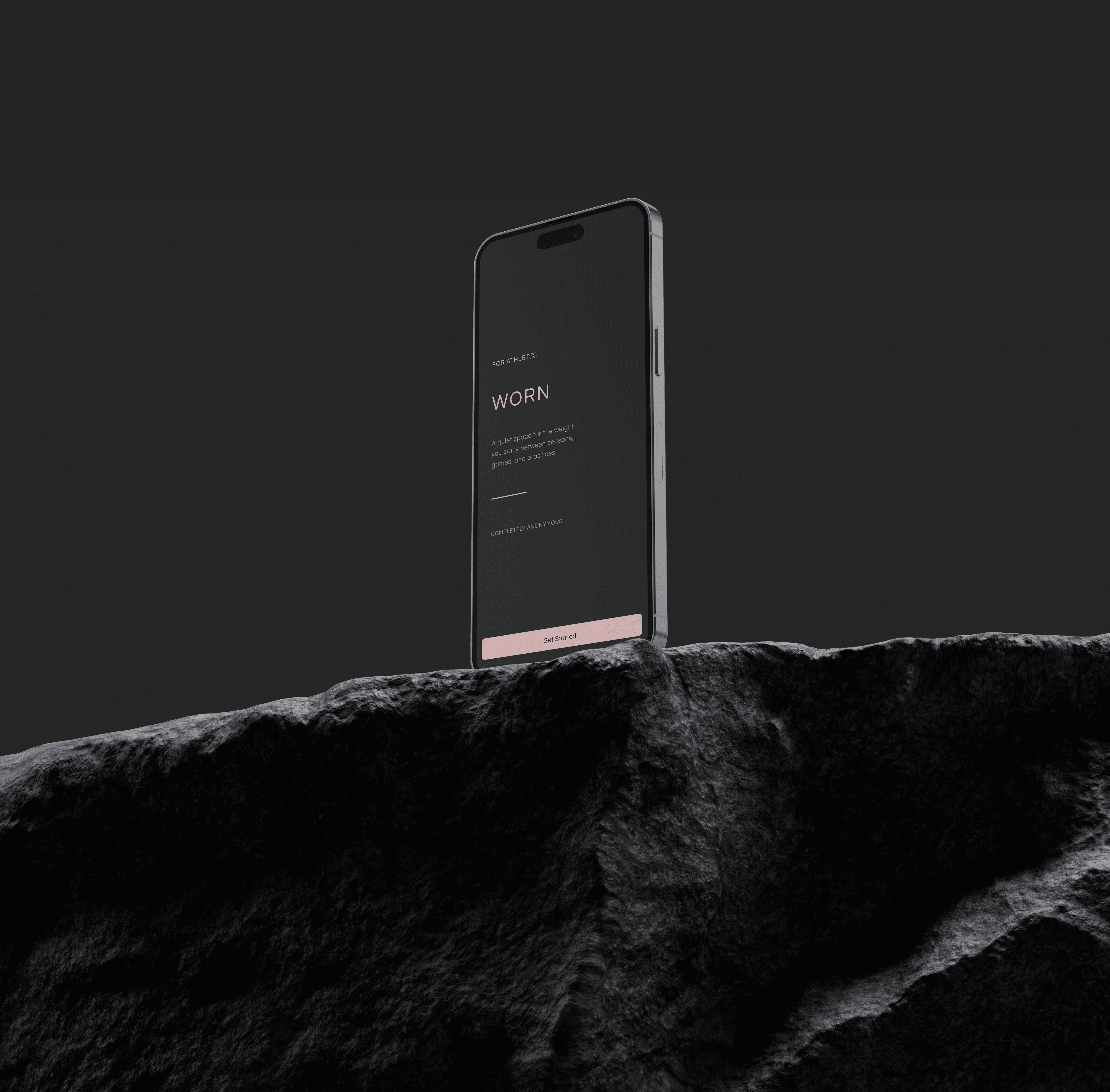
Student-athletes are often expected to maintain a composed, high-performing exterior, leaving little space to process stress, injury, or emotional fatigue. Existing social platforms are not designed for vulnerability and can amplify pressure through comparison and visibility. There is a gap for a private, athlete-centered space where users can reflect honestly without fear of judgment, while still feeling connected to a broader community.
Student-athletes are often expected to maintain a composed, high-performing exterior, leaving little space to process stress, injury, or emotional fatigue. Existing social platforms are not designed for vulnerability and can amplify pressure through comparison and visibility. There is a gap for a private, athlete-centered space where users can reflect honestly without fear of judgment, while still feeling connected to a broader community.
Design Direction
Design Direction
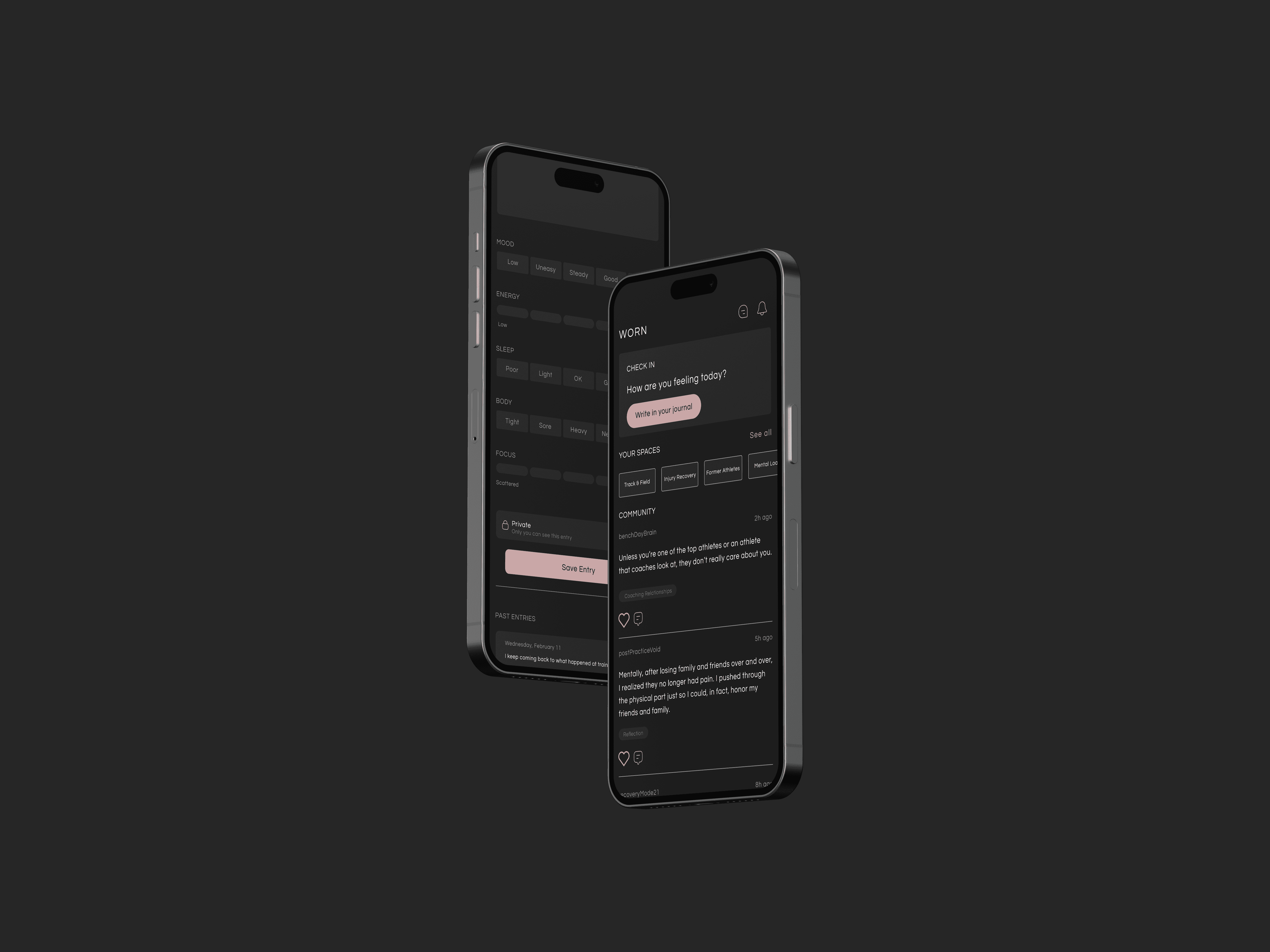
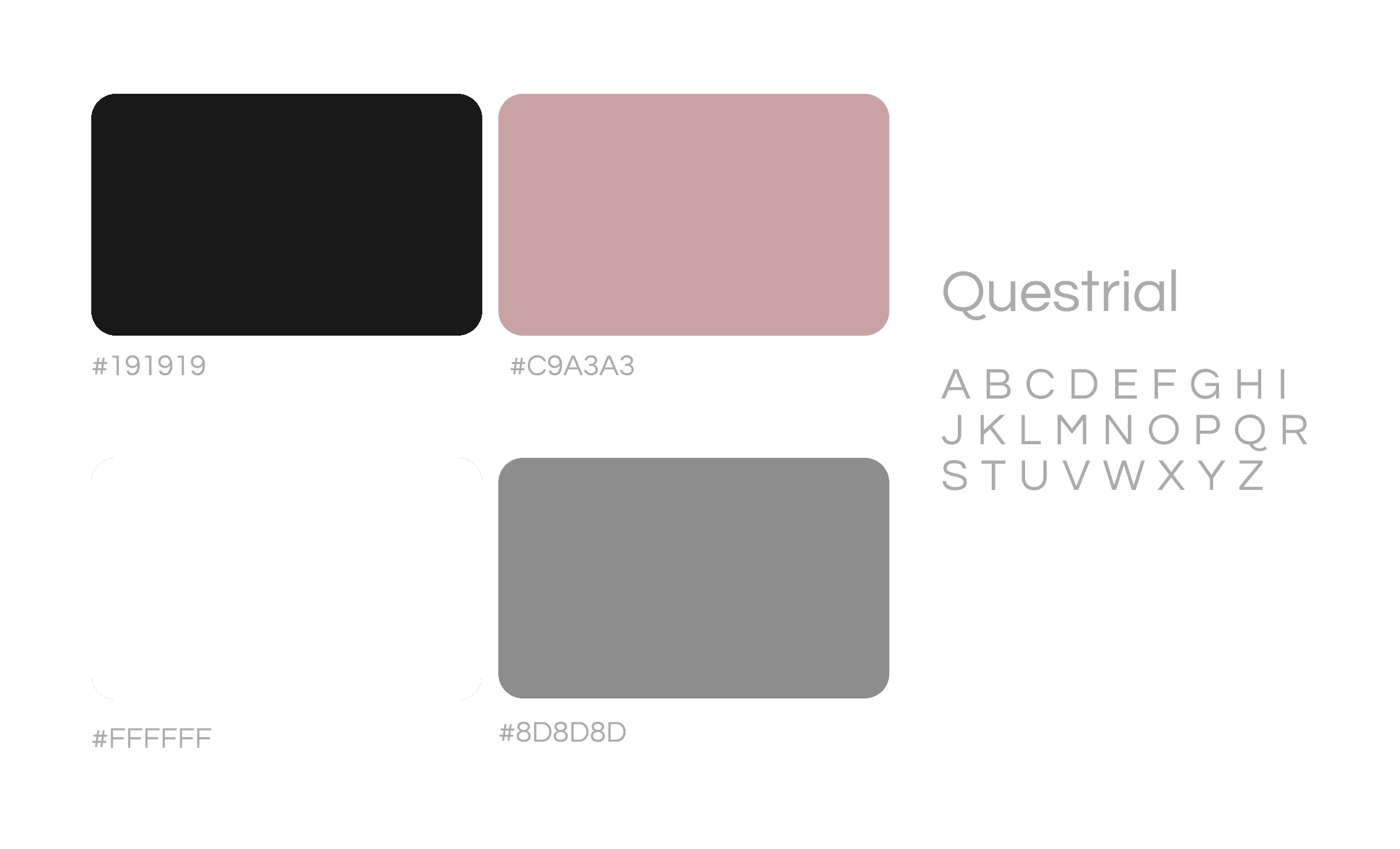
WORN was designed to feel calm, minimal, and emotionally supportive. The interface draws from familiar social media patterns to reduce friction, while removing performative elements that typically discourage vulnerability. A dark-mode foundation was chosen to create a quieter, less stimulating environment, paired with a soft pink accent to subtly signal care, openness, and mental health awareness.
WORN was designed to feel calm, minimal, and emotionally supportive. The interface draws from familiar social media patterns to reduce friction, while removing performative elements that typically discourage vulnerability. A dark-mode foundation was chosen to create a quieter, less stimulating environment, paired with a soft pink accent to subtly signal care, openness, and mental health awareness.
Information Architecture
Information Architecture
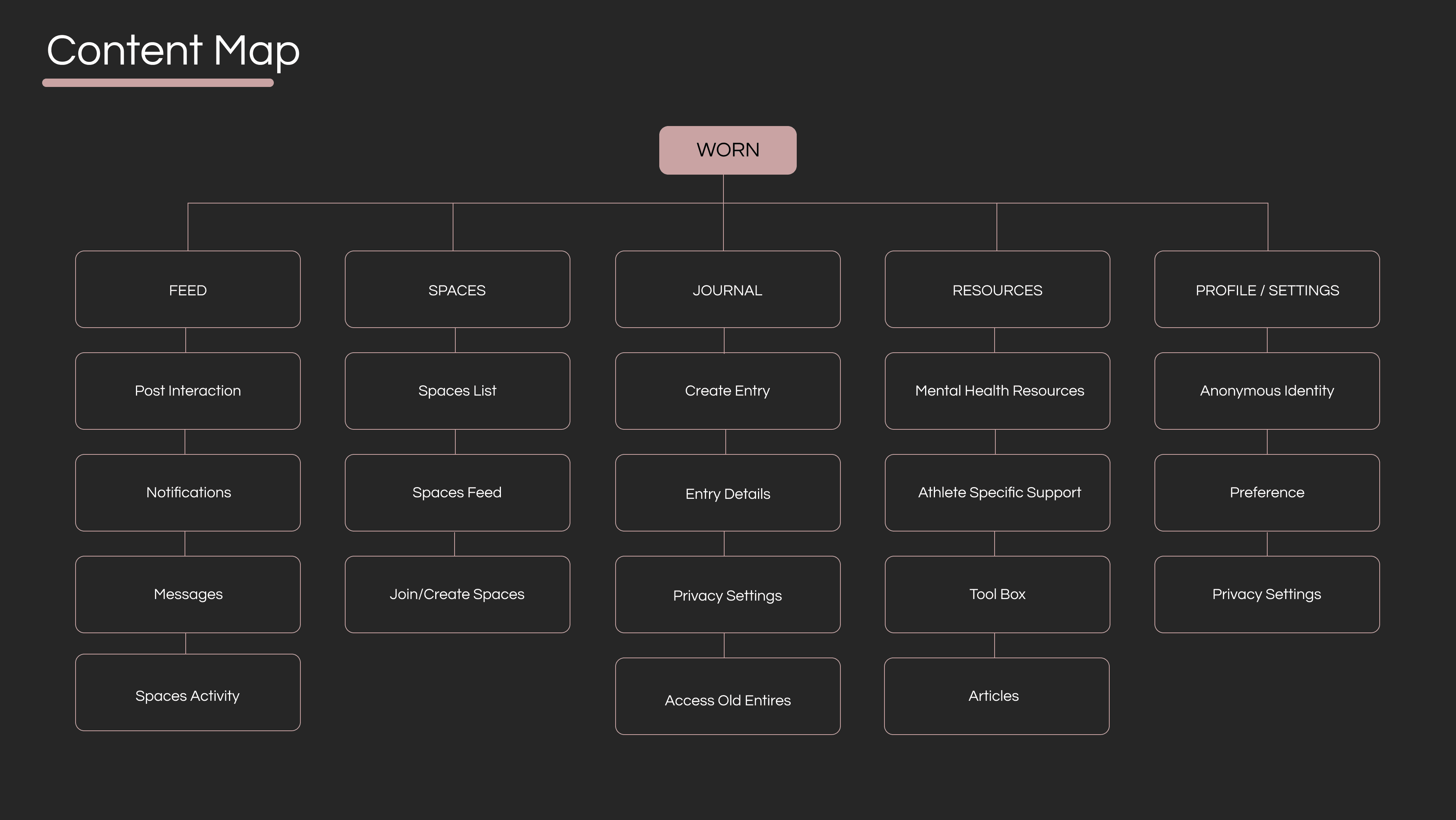
The app is structured to feel intuitive and immediate, allowing users to reflect with minimal effort.
This structure removes unnecessary complexity and keeps the focus on reflection, connection, and support.
The app is structured to feel intuitive and immediate, allowing users to reflect with minimal effort.
This structure removes unnecessary complexity and keeps the focus on reflection, connection, and support.
Key Factors
Key Factors
Anonymity
Users interact through generated identities, allowing for honest expression without fear of judgment or stigma.
Low Friction Journaling
Users can quickly document thoughts immediately after practices or competitions, supporting real-time emotional processing.
Community Without Pressure
The system encourages interaction, but removes metrics and performative elements that can discourage vulnerability.
Style Guide
Final Design
Final Design
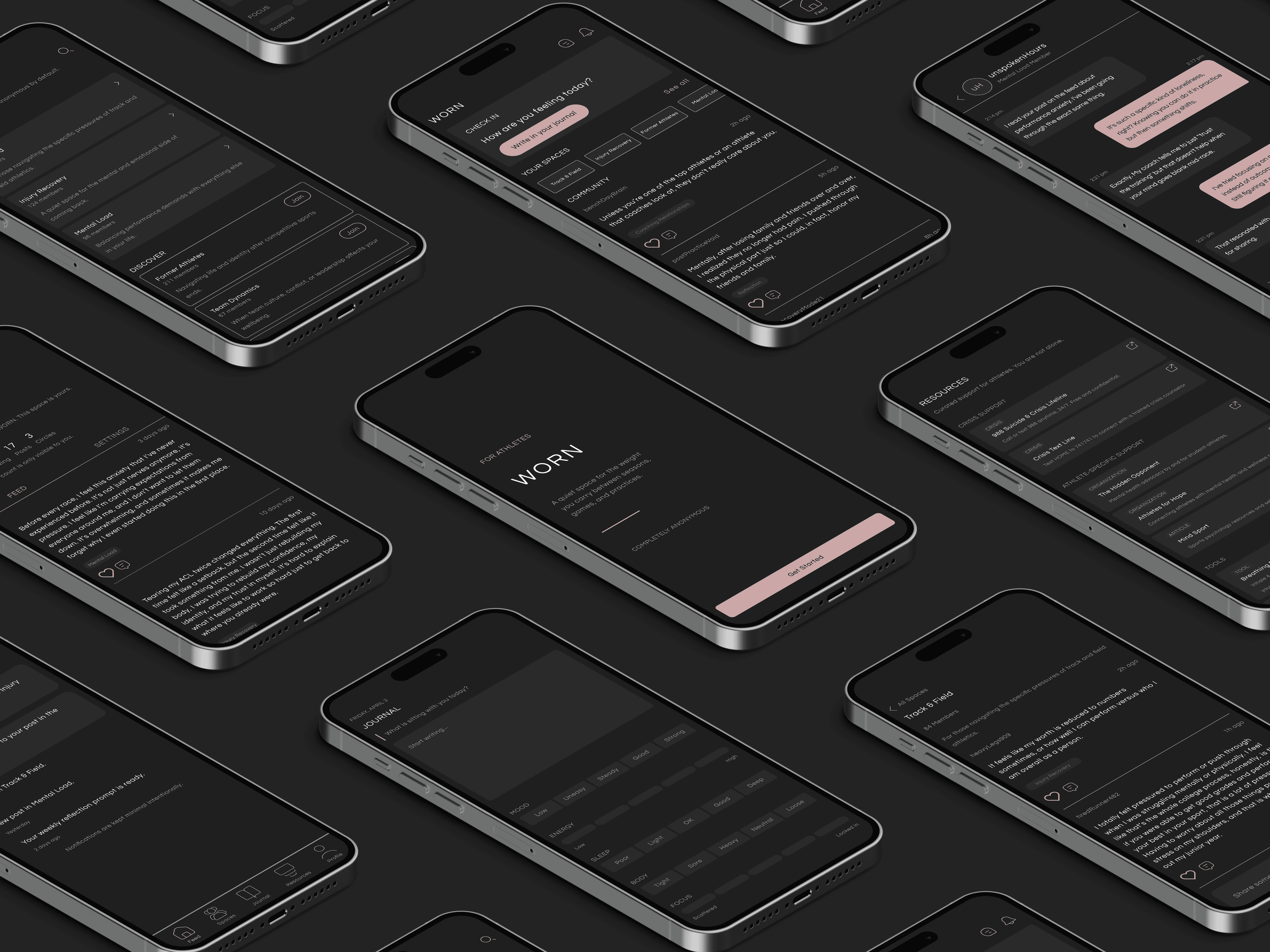
The final design delivers a clean, minimal interface centered around content and user expression. The feed acts as the core experience, supported by simple navigation and subtle interactions.
The design maintains clarity and hierarchy while ensuring the experience feels approachable and non-overwhelming.
The final design delivers a clean, minimal interface centered around content and user expression. The feed acts as the core experience, supported by simple navigation and subtle interactions.
The design maintains clarity and hierarchy while ensuring the experience feels approachable and non-overwhelming.
Outcome
Outcome
WORN provides a space where athletes can express themselves more openly, helping to normalize conversations around mental health in sports. By combining anonymity with familiar interaction patterns, the app lowers the barrier to vulnerability and encourages consistent reflection.
The project demonstrates how UX design can directly support emotional well-being by shaping not just how users interact with a product, but how safe they feel within it. WORN positions design as a tool for both connection and care, addressing a gap that traditional platforms overlook.
WORN provides a space where athletes can express themselves more openly, helping to normalize conversations around mental health in sports. By combining anonymity with familiar interaction patterns, the app lowers the barrier to vulnerability and encourages consistent reflection.
The project demonstrates how UX design can directly support emotional well-being by shaping not just how users interact with a product, but how safe they feel within it. WORN positions design as a tool for both connection and care, addressing a gap that traditional platforms overlook.